

 1h 20m
Food Wars! (Shokugeki no Soma)
Soma's Gotcha Pork Roast
Comfort Food Mains · Hard
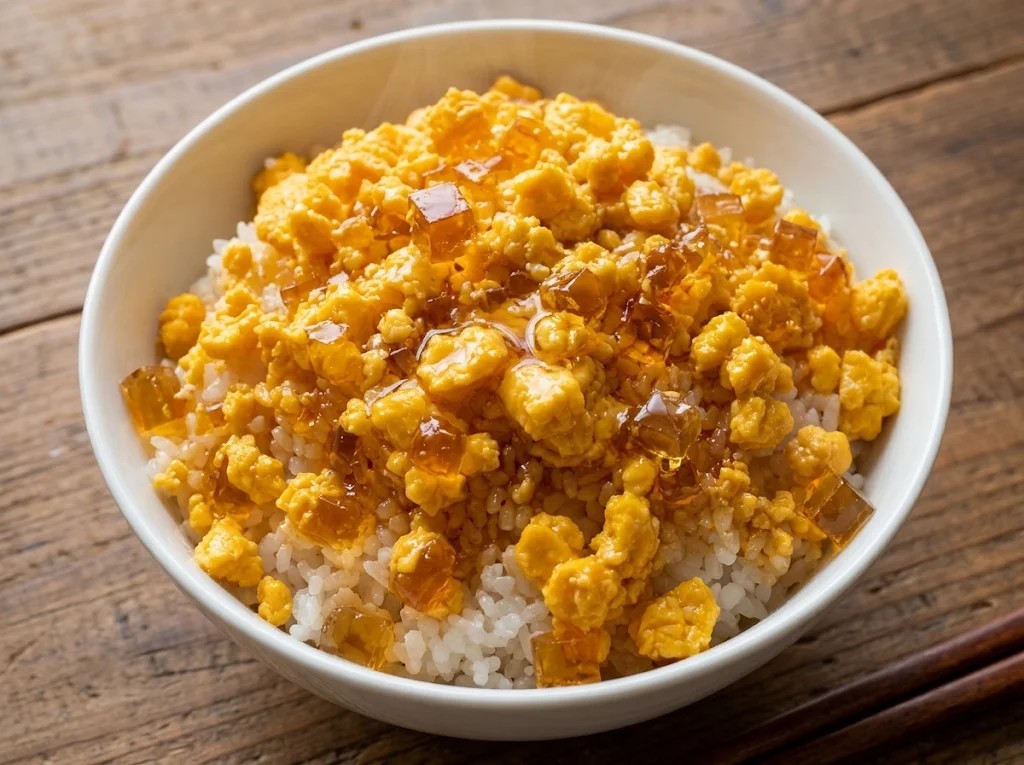
Transforming Egg Furikake Gohan (変身卵ふりかけご飯 — "transforming egg furikake rice") is Joichiro Yukihira's hidden menu item №8 at the family diner, and the dish Soma Yukihira unleashes on Erina Nakiri during the Tōtsuki entrance exam in Season 1 Episode 2. It looks like a bowl of rice buried under golden egg crumbles and translucent chicken jelly cubes — until the steam hits the nikogori and the cubes melt into a savory lacquer that coats every grain.
The technique is classic Japanese home cleverness, not shokugeki fireworks. In the manga (Volume 1, Chapter 2) and anime, Soma does not use lean boneless thigh — he sears chicken wings (tebasaki) in sesame oil and simmers them in katsuobushi dashi so cartilage and joint collagen set the broth as nikogori (煮凝り). Fine iri-tamago stands in for dry furikake. Hot rice is the catalyst; plating happens at the last second so Erina (and you) taste the "transformation" at the table.
Plan a day ahead if you can: the nikogori needs 4–8 hours chilled to cube cleanly — listed Total time (5 hr 55 min) includes a mandatory 4-hour passive chill, same logic as Takumi's semifreddo freeze window. Active prep is about 40 minutes plus 60–75 minutes at the stove for the wing simmer; cook rice separately (~45 minutes from dry koshihikari). Difficulty is medium — no special tools, but collagen extraction, broth reduction, and chilling matter for cubes that hold their shape yet melt on contact.
Recipe ingredients
first and second infusion
iri-tamago furikake layer
season wing simmer broth
bone-in flats and tips; split at joints for collagen
optional — only if natural set is weak after chilling
Pantry staples
Salt, oil, butter, and other basics you likely already have — scaled with servings above.
As an Amazon Associate, we earn from qualifying purchases — at no extra cost to you. Opens an Amazon search; prices vary. Affiliate disclosure.
Koshihikari short-grain rice
Steaming-hot base for the transform — rinse until the water runs mostly clear.
Amazon · See Amazon
Shop on AmazonKatsuobushi (bonito flakes)
First and second dashi infusion — the aromatic backbone of Soma's wing broth.
Amazon · See Amazon
Shop on AmazonJapanese rice cooker
Even, repeatable batches of sticky rice for four donburi-sized bowls.
Amazon · See Amazon
Shop on AmazonWipe 1 strip kombu (~6 in / 15 cm) with a damp cloth — do not rinse. Add to a pot with 5 cups cold water and 3 coins fresh ginger. Heat on medium-low; remove kombu just before the water boils (about 10 minutes). Off heat, add 1½ cups packed katsuobushi; steep 2 minutes, then strain through a fine sieve. Reserve solids for a second infusion in step 2 if you want stronger dashi.
Split 1½ lb (680 g) bone-in chicken wings (flats and tips) at the joints so bone ends and cartilage are exposed — do not use boneless thigh; it will not set nikogori. Heat 1 tbsp sesame oil in a heavy pot on medium-high. Sear wings until lightly golden on several sides. Pour in strained dashi from step 1. Add 1 tbsp cooking sake, 2 tbsp Japanese dark soy sauce, 1 tbsp hon-mirin, 1 tsp granulated sugar, and kosher salt to taste — the amber nikogori needs this savory-sweet balance once it melts on plain rice. Simmer gently, partly covered, 60–75 minutes until wings are fully cooked and the broth tastes rich. Lift wings; shred all meat finely with forks (manga-style — the meat belongs in the dish, not a leftover container). Return bones and cartilage to the pot and simmer another 10 minutes for extra collagen, then strain the liquid.
Boil the strained simmer liquid to about 2 cups (480 ml) — it should feel viscous and coat the back of a spoon. For extra bonito depth, add a second ½ cup packed katsuobushi during the last 5 minutes of reduction, then strain again. Off the heat, if the broth still seems too thin to gel firmly after chilling, whisk in 1 tsp (3 g) unflavored powdered gelatin until dissolved — do not return to a rolling boil. Spread the shredded wing meat evenly in a shallow tray, then pour the hot broth over it so the chicken is trapped inside the set jelly (official manga approach). Cool to room temperature, then refrigerate uncovered until set, 4–8 hours.
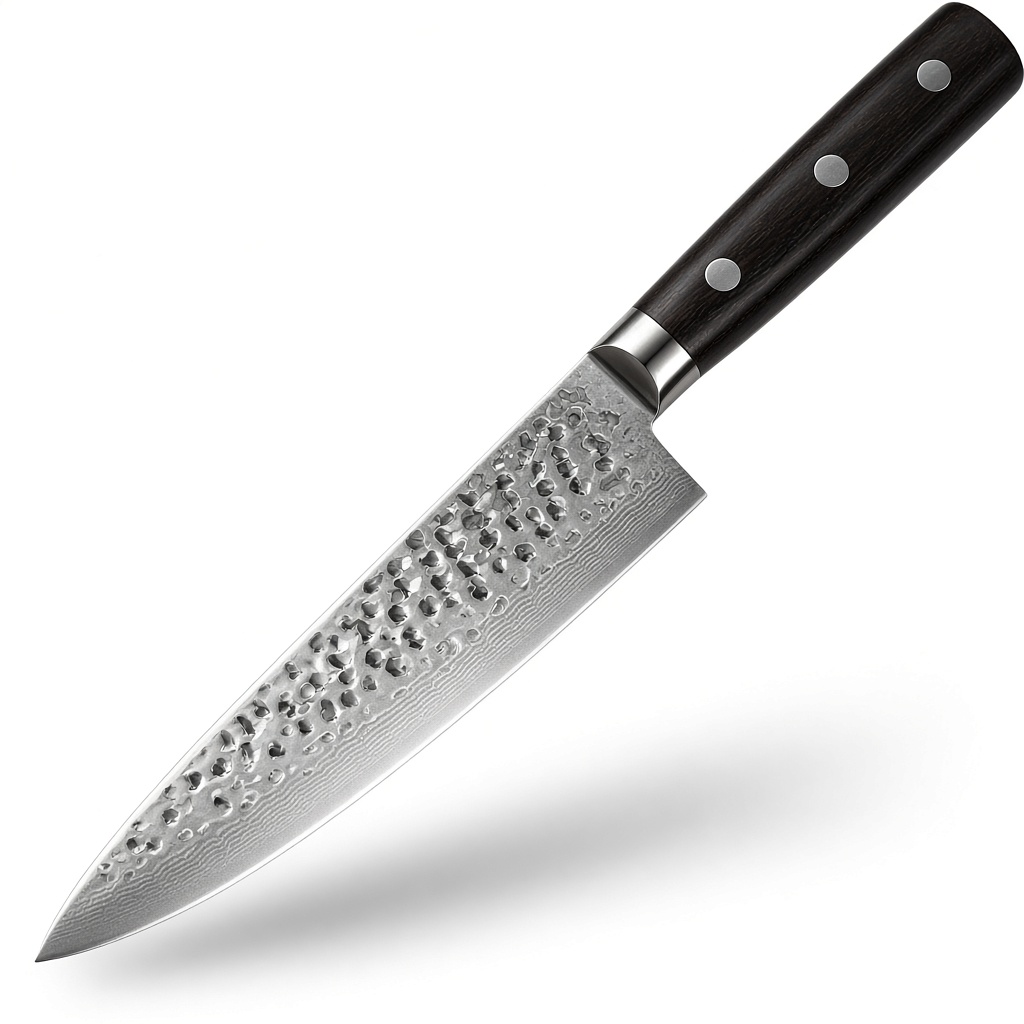
Run a knife around the set jelly and cut into ½-inch (1.2 cm) cubes — each piece should carry threads of chicken inside, like the glossy amber cubes in the anime screenshot. Refrigerate until plating.
Beat 4 large eggs with 1 tbsp cooking sake and a pinch of kosher salt. Heat 2 tsp neutral oil in a nonstick skillet on medium. Pour in eggs; stir constantly with chopsticks or a silicone spatula, breaking curds smaller as they set. Cook until dry, fluffy, golden crumbles — not wet scrambled eggs. Spread on a plate to cool slightly.
Keep about 4 cups cooked koshihikari warm (~250 g per bowl, ~1 kg total). Reheat with a splash of water if needed. Rice must be steaming — cold rice will not melt the nikogori properly.
Pack hot rice into 4 bowls (~250 g each). Heap a generous layer of iri-tamago over each, then scatter chicken nikogori cubes (gelatin plus shredded wing meat) across the top — enough cubes to cover the egg like the anime frame.
Serve immediately. At the table, the nikogori cubes should begin melting into the rice within seconds — stir once so the seasoned broth coats the grains. Shower each bowl with finely sliced green scallions (2 stalks total, green parts only) for the bright asatsuki finish Erina sees after the transform. Taste while hot, like Soma intended for Erina.
Nikogori gels from collagen, not from meat alone: boneless thigh poached in dashi rarely sets firm cubes after reduction. Split 1½ lb bone-in wings at the joints so bone ends and cartilage face the liquid — that matches Soma's tebasaki approach. Sear in 1 tbsp sesame oil before simmering with 1 tbsp cooking sake, 2 tbsp Japanese dark soy, 1 tbsp hon-mirin, and 1 tsp sugar — the amber, savory-sweet broth from Episode 2 needs that balance on unsalted rice. Shred all wing meat and trap it in the jelly (do not discard). After reducing strained broth to about 2 cups (480 ml), it should coat a spoon and wobble like firm Jell-O when chilled. If it is still watery after 8 hours in the fridge, whisk 1 tsp (3 g) unflavored powdered gelatin into the hot broth off the heat (do not boil gelatin), then rechill. Cut ½-inch (1.2 cm) cubes with a sharp, wet knife. For iri-tamago, beat 4 eggs with the remaining 1 tbsp cooking sake and a pinch of kosher salt. Finish bowls with finely sliced scallion greens (asatsuki-style) for the green-on-gold contrast Erina sees after the melt.
Nikogori keeps 3 days refrigerated in an airtight container; wing meat stays embedded in the jelly — cut fresh cubes when serving. Iri-tamago is best within 24 hours refrigerated — re-crisp in a dry pan 30 seconds before plating. Slice scallions fresh at assembly. Do not store assembled bowls; the transform moment is one-time.
Miso soup and simple Japanese pickles on the side — the same lunch-diner pairing Yukihira guests would expect. A sprinkle of nori furikake on a test bowl lets you compare Soma's from-scratch version with store-bought furikake.

