
 30m
30mDemon Slayer (Kimetsu no Yaiba)
Tanjiro's Miso Yaki Onigiri
Bento & Rice Dishes · Easy
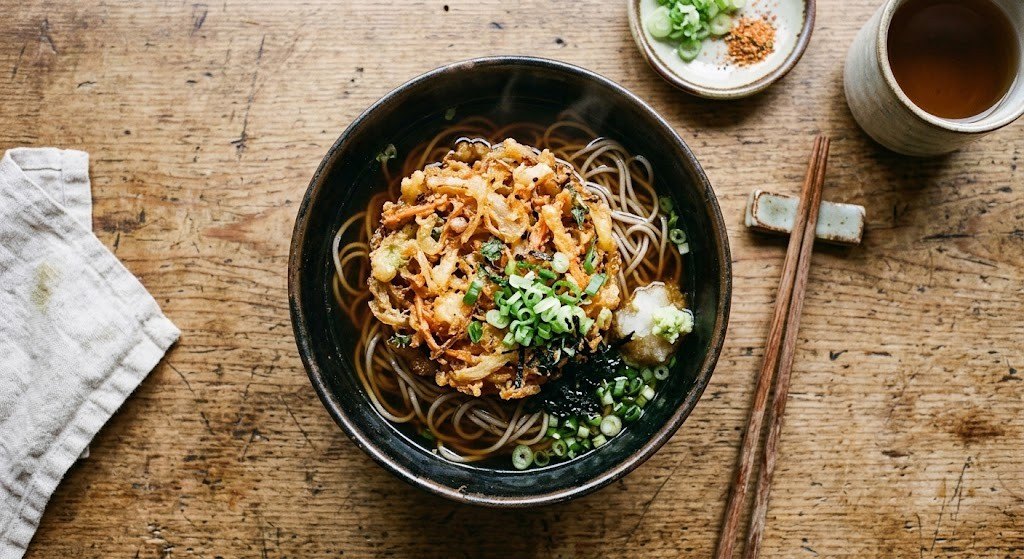
Mugen Train Arc Season 2 Episode 1 — the Flame Hashira prequel — shows Kyojuro Rengoku at a city soba counter before his mission, demolishing a huge golden kakiage with chopsticks and that famous Umai. That mixed vegetable-and-shrimp fritter over hot buckwheat noodles is this bowl. (In the Mugen Train film he eats Gyūnabe bentō on the train, not kakiage — fans often mix the two scenes.)
Kakiage means scraping mixed scraps into hot oil so they fry as one lacy disc. Sweet potato julienne, onion, green beans, and shrimp get a dry flour coat (uchiko) so the batter sticks, then a cold flour-katakuriko batter with no egg. The kakejiru follows the usual hot-soba ratio: 800 ml dashi with about 80 ml Japanese soy and 75 ml hon-mirin (10:1:1), plus a pinch of sugar if your mirin is dry.
Plan about 20 minutes of prep and 25 at the stove for two bowls. Fry the kakiage last, cook the soba, then pour broth only when you sit down — the noodles go slack fast, and the fritter should still crunch when Rengoku would already be asking for seconds.
Recipe ingredients
peeled; cut large ones in half
Pantry staples
Salt, oil, butter, and other basics you likely already have — scaled with servings above.
As an Amazon Associate, we earn from qualifying purchases — at no extra cost to you. Opens an Amazon search; prices vary. Affiliate disclosure.
Peel 70 g sweet potato and cut into fine julienne about 2–3 mm thick so it cooks with the shrimp and onion. Slice ½ onion (about 75 g) into thin wedges. Trim 40 g green beans and cut each in half.
Pat 70 g raw shrimp dry. Cut large ones into 2–3 pieces so they bind in the kakiage instead of falling out.
Toss the shrimp, onion, sweet potato, and green beans in a bowl with 1 tbsp dry all-purpose flour until lightly dusted — this uchiko layer helps the batter cling.
In a cold bowl, stir the remaining 5 tbsp all-purpose flour and 2 tbsp katakuriko. Pour in 70 ml ice-cold water and mix only until barely combined — lumps are correct. Fold the dry-coated filling into the batter so every piece is thinly coated, not swimming.
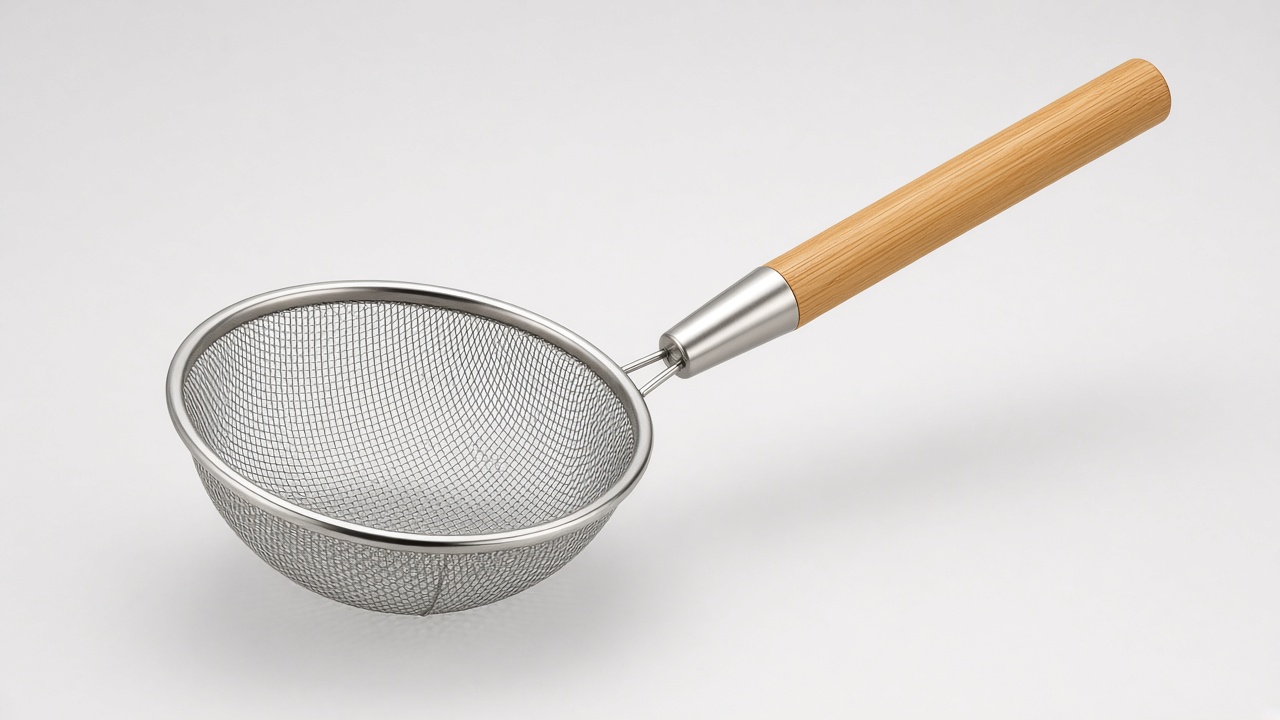
Heat 2–3 cups neutral oil (about 3 cm depth in a medium pan) to 170°C. Scoop a large spoonful onto a spider strainer, hold it in the oil 3–4 seconds so the disc sets, then release. Fry 3–4 minutes until deep gold, turning once with the spider. Repeat for 4 fritters. Drain on a wire cooling rack.
Bring 800 ml dashi stock to a gentle simmer. Stir in 5 tbsp (80 ml) Japanese soy and 5 tbsp (75 ml) hon-mirin — roughly a 10:1:1 kakejiru ratio. Add 1 tsp sugar if the broth tastes flat. Simmer 2–3 minutes more. Keep hot.
Boil 200 g dried soba noodles per package time minus 30 seconds. Drain well in a strainer. Do not let them sit.
Divide noodles into 2 bowls. Set two kakiage on each. Ladle hot broth over only when you are ready to eat — Rengoku would not wait, and neither should the crunch.
Toss the shrimp and cut vegetables with 1 tbsp dry flour before you add wet batter — that uchiko layer stops the kakiage from barabara in the oil. Keep the batter cold and lumpy; extra stirring makes a bready crust. Lift each disc with a spider strainer and drain on a wire rack, not paper towels. Hold each spoonful in the 170°C oil for 3–4 seconds so the disc sets before you let go. Usukuchi soy keeps the broth paler; koikuchi tastes the same and browns it a little. Never let cooked soba wait in the bowl without broth — assemble at the table.
Kakiage is best the minute it leaves the rack. Leftover fritters reheat in a 180°C oven or air fryer for 4–5 minutes — a microwave turns them soggy. Broth keeps 3 days refrigerated. Cook soba fresh per bowl.
Pickled ginger and a cup of barley tea — standing-soba energy. A small mound of grated daikon on the side cuts the fry if you want it.