 6h 45m
Naruto
Ichiraku Ramen (Extra Miso Style)
Ramen & Noodles · Hard
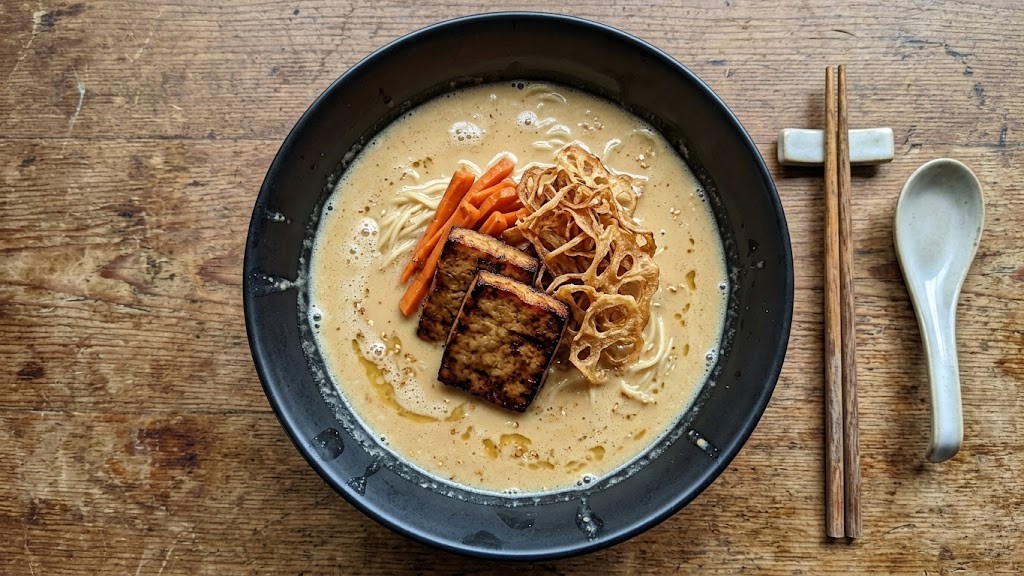
In Season 1 Episode 16, Joichiro Yukihira faces Soma in a father-son breakfast duel and serves Kotteri Vegetarian Ramen — soy milk, kombu and shiitake dashi, miso, rectangular marinated tempeh, fried lotus root, and grilled carrot. The judges' shock is that it eats like heavy tonkotsu yet stays light enough for 6 a.m.
This page is an explicit meat-lover's adaptation for home cooks who want pork richness, not the screen-accurate vegetarian build. Pork bones and duck fat make a velvety broth; skin-on belly is braised flat and seared into thick rectangular pavés (like tempeh blocks on screen — not rolled chashu spirals). For the canon vegetarian path, see the FAQ.
Plan a full day: about 45 minutes active prep, then mostly passive simmering. Start the broth with plenty of water — you need roughly 1.2–1.4 L finished broth for four bowls after a long reduction. Broth and chashu can be made the day before; cook noodles and assemble fresh.
Recipe ingredients
braised flat for rectangular chashu
broth + chashu
topping
optional topping
Pantry staples
Salt, oil, butter, and other basics you likely already have — scaled with servings above.
As an Amazon Associate, we earn from qualifying purchases — at no extra cost to you. Opens an Amazon search; prices vary. Affiliate disclosure.
Add 2 lb pork bones to a large pot with cold water to cover. Bring to a boil over high heat and blanch 10 minutes — foam and scum will rise. Drain, rinse bones under cold running water, and return to the pot.
Cover blanched bones with 14 cups (3.5 L) fresh water — a small pot will not hold this much; use at least a 6-quart (6 L) stockpot. Add 2 tbsp duck fat (or 1 duck leg), 1 large onion sliced, 5 garlic cloves smashed, and 1 thumb-sized piece fresh ginger sliced. Bring to a boil, then reduce to the gentlest simmer.
Simmer partially covered 6 hours, skimming fat and scum from the surface every 30 minutes. Add hot water whenever bones peek above the liquid — expect to top up several times. You want about 1.2–1.4 L (5–6 cups) of strained, seasoned broth left for four deep bowls after reduction and seasoning.
Strain broth through a fine mesh sieve; discard solids. Return clear broth to the pot. Stir in 2 tbsp Japanese dark soy, 1 tbsp aka miso (whisked smooth in a ladle of hot broth first), 1 tbsp hon-mirin, and 1 tbsp cooking sake. Simmer 10–15 minutes to concentrate — the finished broth should be thick, pale, and rich.
Use 1 lb skin-on pork belly as a flat slab — do not roll or tie (rolls give spirals, not anime-style rectangles). Combine ¼ cup Japanese dark soy, ¼ cup cooking sake, ¼ cup hon-mirin, 1 tbsp granulated sugar, 2 minced garlic cloves, and 1 inch fresh ginger sliced in a wide saucepan. Add the belly slab, cover with a foil lid, and braise on low 2 hours, turning once, until tender and glazed.
Remove pork from braising liquid; rest 10 minutes. Heat 1 tbsp neutral oil in a skillet over high heat. Sear the flat slab on both faces until deeply browned — about 2 minutes per side. Cross-cut into thick rectangular pavés, the same shape as Joichiro's tempeh blocks on screen.
While chashu rests, soft-boil 4 eggs exactly 7 minutes; ice-bath, peel, and halve. Drain 1 cup menma. Finely slice 1 bunch scallions. Cut 4 nori sheets into halves for tucking upright in each bowl.
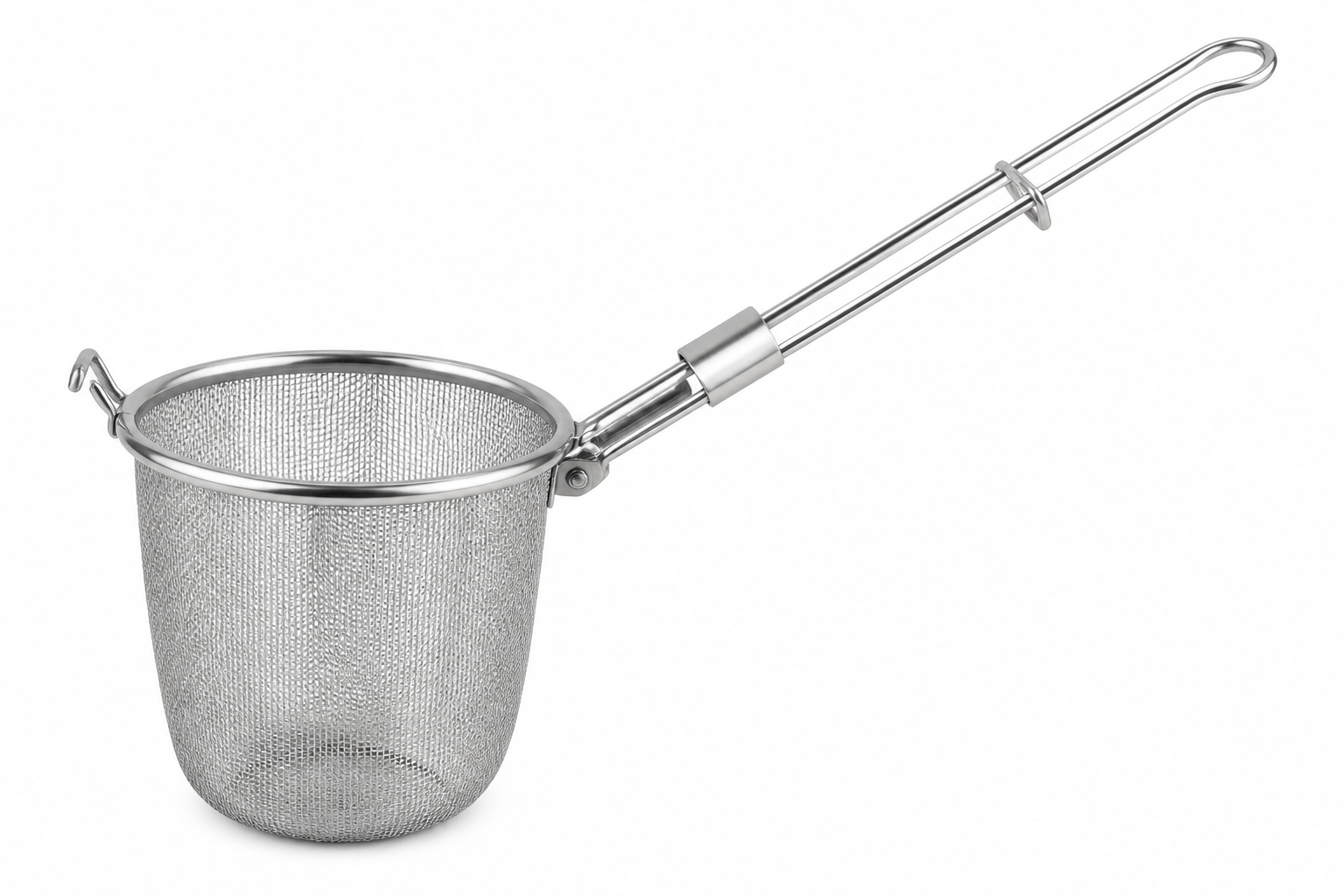
Bring a pot of water to a rolling boil. Blanch 4 portions fresh ramen noodles in a strainer basket 90 seconds — follow package timing if different. Drain well; do not rinse unless the noodles are very starchy.
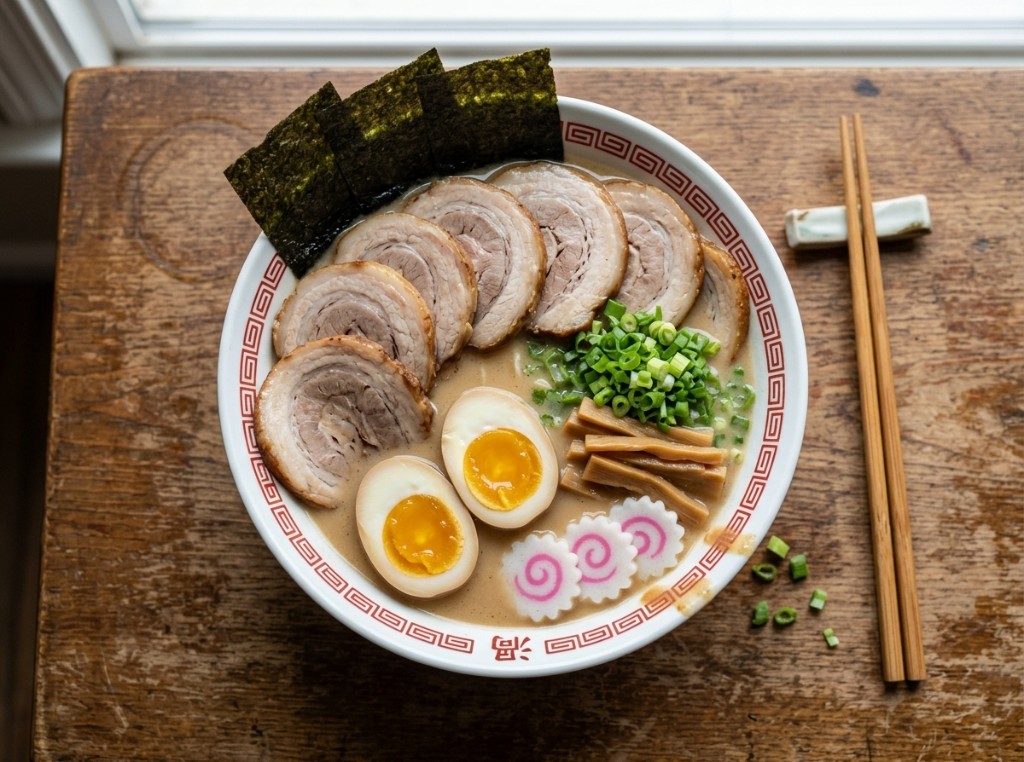
Divide noodles among 4 deep bowls. Ladle hot rich broth over noodles. Top each bowl with thick chashu rectangles, half a soft-boiled egg, menma, scallions, and nori standing upright. Serve immediately while the chashu crust is still crisp.
Skim the bone broth every 30 minutes and keep bones submerged — add hot water whenever the level drops during the 6-hour simmer. Duck fat (or a rendered duck leg) adds the luxurious mouthfeel. Do not roll pork belly: braise the slab flat in the soy mixture, then sear and cross-cut into thick rectangles. Soft-boil eggs 7 minutes for a jammy yolk; marinate in leftover chashu braising liquid if you want extra depth.
Broth keeps 4 days refrigerated or 2 months frozen. Chashu keeps 4 days refrigerated. Store noodles separately — assemble bowls fresh. Do not freeze assembled ramen.
Pickled ginger, extra menma, and iced barley tea. For anime-accurate garnish, shallow-fry lotus root slices until golden and fan them beside the chashu.